
Facebook Subtitle
Lorem ipsum dolor sit amet, consetetur sadipscing elitr, sed diam nonumy eirmod tempor invidunt ut labore et dolore magna aliquyam erat, sed diam voluptua. At vero eos et accusam et justo duo dolores et ea rebum. Stet clita kasd gubergren, no sea takimata sanctus est Lorem ipsum dolor sit amet. Lorem ipsum dolor sit amet, consetetur sadipscing elitr, sed diam nonumy eirmod tempor invidunt ut labore e
Google Subtitle
Lorem ipsum dolor sit amet, consetetur sadipscing elitr, sed diam nonumy eirmod tempor invidunt ut labore et dolore magna aliquyam erat, sed diam voluptua. At vero eos et accusam et justo duo dolores et ea rebum. Stet clita kasd gubergren, no sea takimata sanctus est Lorem ipsum dolor sit amet. Lorem ipsum dolor sit amet, consetetur sadipscing elitr, sed diam nonumy eirmod tempor invidunt ut labore e
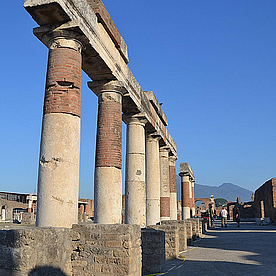
Archaeological Investigations and Excavations of Ancient Urbanity
Urbanisation set the pace for the development of ancient civilisations. The cities of antiquity gave rise to new forms of cohabitation and complex legal, economic and power structures. Lifestyles also became more elaborate. The project studies the material legacy of cities in Ancient Greece and Rome, including Pompeii, Selinunte, Apollonia and Terracina, creates networking opportunities for institutes, and investigates new interdisciplinary methods.
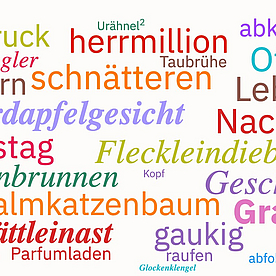
Bayerns Dialekte Online
Bayerns Dialekte Online (BDO) is the central online platform for the Academy’s three Bavarian dialect dictionaries: the Bavarian Dictionary, the Franconian Dictionary and the Dialectology Information System for Bavarian Swabia. The database contains the research findings from all three projects and makes them available along with the dictionary entries in an open-access online tool with extensive search functionalities.
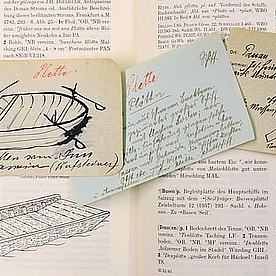
Bavarian Dictionary
The Bavarian Dictionary project explores and documents the vocabulary of the dialects of Old Bavaria (a region corresponding nowadays to Upper Bavaria, Lower Bavaria and the Upper Palatinate) from the early Middle Ages to the present day. As well as the literary tradition dating from the 8th century, the researchers are also interested in the dialects as they are spoken today, which they record using the latest citizen science methods. The dictionary provides information on the grammar, age, geographical spread, frequency, pronunciation and origin of each word.
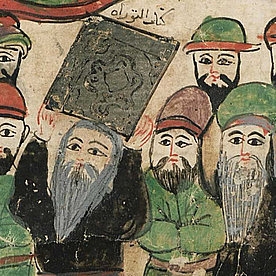
Biblia Arabica
This project is a comprehensive study of Arabic translations of the Hebrew Bible / the Old Testament. These texts are an important testimony to the shared cultural heritage of the Jewish, Christian and Muslim communities of the Middle East. Digital methods are used to identify and describe approximately 8,200 manuscripts and digitally publish a selection of them in editions and English translations.
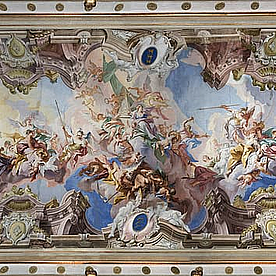
Corpus of Baroque Ceiling Painting in Germany
Ceiling and wall paintings were among the most iconic design elements of baroque interiors. Between 1550 and 1800, castles, churches, ballrooms and libraries were graced with astonishingly diverse and innovative surface paintings. The project studies the 4,000 or so preserved and restorable paintings that have survived in present-day Germany. Innovative digital techniques are used to make the findings available in an online database.
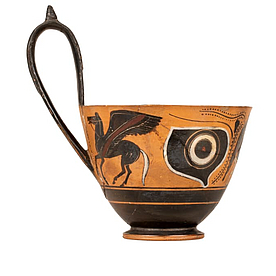
Corpus Vasorum Antiquorum
The shapes, decorations and inscriptions of ancient Greek ceramics are a special kind of historical source, offering a wealth of information on what life was like in the living environments of the time. They provide one of the most important foundations of our knowledge of antiquity, complementing the information acquired from written sources. The international Corpus Vasorum Antiquorum project uses uniform standards to catalogue the painted ancient Greek vases in museums and collections around the world and makes this information available in an online database.
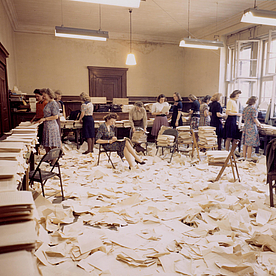
Digital Nuremberg Military Tribunals
The project provides digital access to the extensive files produced in the subsequent Nuremberg trials (1946–1949). Its work combines basic research on (legal) history with digital humanities methods, artificial intelligence and natural language processing. The project’s aims are to make an important chapter of Germany’s post-war history more accessible to an international audience, as well as provide fresh impetus for research on international criminal law and reappraisal of the crimes of the Nazi regime.
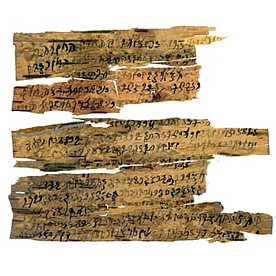
Early Buddhist Manuscripts from Gandhāra
Gandhāra is the former name of the region now located in north-western Pakistan and neighbouring parts of Afghanistan. Its wealth in ancient times came from Silk Road trade and the region played a key role in the transmission of Indian Buddhism to Central and East Asia. The project examines and edits the Buddhist manuscripts discovered in this region since the 1990s.
Ecology Forum
The Ecology Forum is made up of experts in the field of environmental research. Its work involves communicating ecology research topics and findings to the general public, interdisciplinary discussion of topical environmental issues, offering solutions to current problems and challenges, and advising political and management decision-makers on a regular basis.
Franconian Dictionary
The Franconian Dictionary project collects, documents and describes the complete vocabulary of the Franconian dialect in an online database. The work is based on over 100,000 questionnaires dating from 1927 to 2001, which are semantically, grammatically and etymologically analysed by the editorial team.
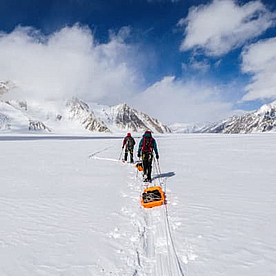
Geodesy and Glaciology
In this project, researchers from the fields of geodesy, geophysics and meteorology collaborate to study glaciers in their role as important climate indicators as well as how glaciers affect the continental water cycle and interact with the Earth’s solid surface. In addition to taking long-term measurements at the Vernagtferner glacier in the Ötztal Alps, the researchers’ work also takes them to Norway, Iceland, the Pamir Mountains and the Karakoram Range. An additional focus area is the observation of geodynamic processes using the latest satellite geodesy methods.
German Colonialism in the Philippines
The collection of pharmacist Heinrich Rothdauscher (1851–1937) is among the oldest focusing on the Philippines to be found in German museums. It comprises 112 culturally sensitive ritual, cult and everyday objects which are currently preserved in Munich’s Museum Fünf Kontinente. In cooperation with the societies of origin and Filipino researchers, the project aims to explain the historical context in which the objects were acquired. It does this through a digital text edition of key sources, complete photographic documentation of the collection and 3D scans of selected items.
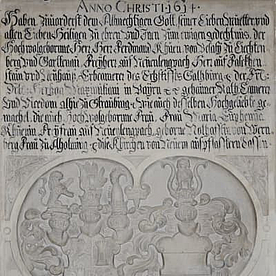
German Inscriptions from the Middle Ages and Early Modern Period
Inscriptions are texts marked on “durable” materials such as stone, wood, metal, textile and glass. They often provide a better record of historical events and figures than other written sources. The project makes inscriptions from Bavaria dating from the Middle Ages and the early modern period accessible in a single edition. The work involves transcribing often only partially legible texts as well as translation, object description, historical classification and commentary.
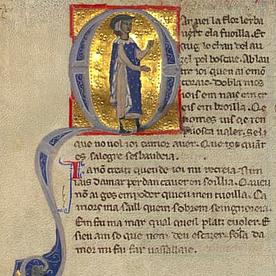
Knowledge Networks in the Medieval Romance Cultural Sphere
During the High and Late Middle Ages, science communication was very often conducted in the languages of the Romance cultural sphere, such as Italian, French or Occitan. The use of these languages enabled cultural exchange and helped to lay a foundation for the European identity as a knowledge society. The project looks at two of the knowledge domains during that period – medicine and law – and combines methods from the fields of linguistics, textual philology and history of science with digital humanities and ontology engineering.
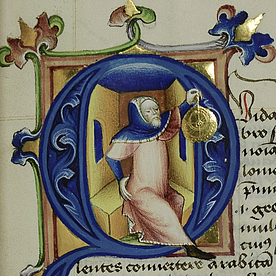
Ptolemaeus Arabus et Latinus
Polymath Claudius Ptolemaeus (c. AD 100–160), better known as Ptolemy, was the most influential proponent of geocentrism and the author of such works as the Almagest and the Tetrábiblos. This project catalogues the Arabic and Latin versions of his astronomical and astrological works via catalogues of all surviving manuscripts, editions of Arabic and Latin works either written by Ptolemy or falsely attributed to him, and commentary literature. Research tools and studies are further components of the project.
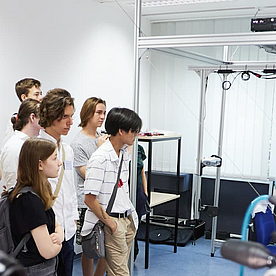
Technology Forum
Creating a greater understanding and acceptance of technology in Bavaria is the mission of an interdisciplinary group of experts that make up the Technology Forum. In a bid to improve the uptake of STEM subjects, it set up a schools programme to give upper secondary level pupils in Bavaria close insight into the latest technology research. The symposia organised by the Forum, which are mainly aimed at teachers, are regarded as particularly important for promoting the STEM subjects.
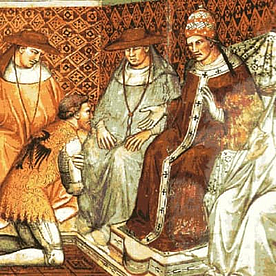
The Formation of Europe by Overcoming the Schism of the 12th Century
The Alexandrine schism (1159–1177) was the most crucial test in the formation phase of the High Middle Ages in Europe. “The Formation of Europe by Overcoming the Schism of the 12th Century” is a project set up to examine the course of events and mechanisms of the papal schism. It uses this historical episode as a model and comparative case to analyse overarching questions relating to division, escalation and crisis management.