Languages
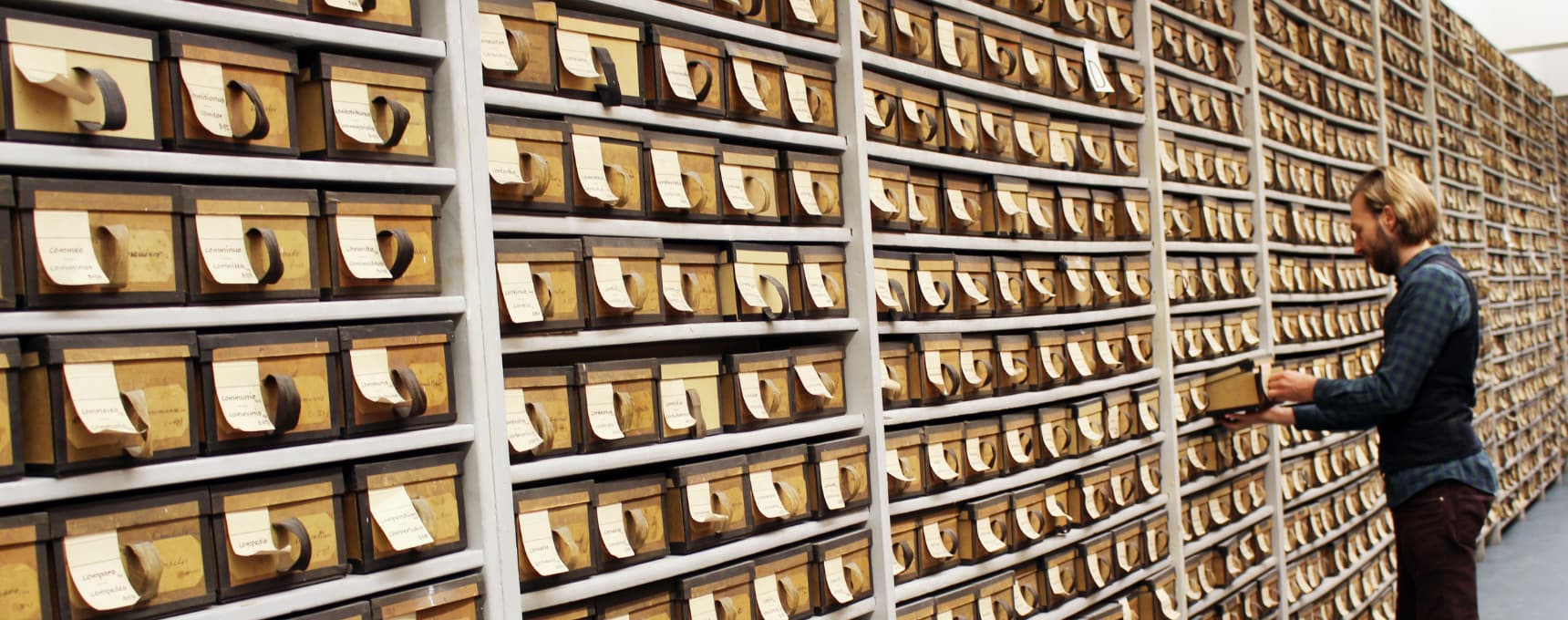
Languages, both in spoken and written form, are an important facet of cultural heritage. The Academy produces scholarly dictionaries and editions dedicated to subjects ranging from ancient Latin – which remains authoritative in fields like botany and medicine – to regional dialects.
Biblia Arabica
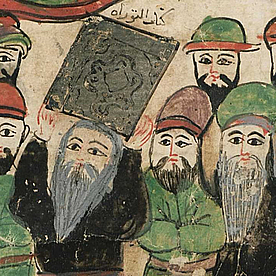
This project is a comprehensive study of Arabic translations of the Hebrew Bible / the Old Testament. These texts are an important testimony to the shared cultural heritage of the Jewish, Christian and Muslim communities of the Middle East. Digital methods are used to identify and describe approximately 8,200 manuscripts and digitally publish a selection of them in editions and English translations.
Bavarian Dictionary
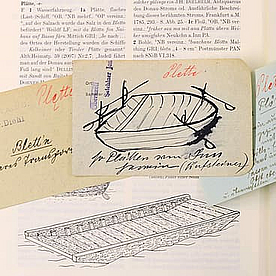
The Bavarian Dictionary project explores and documents the vocabulary of the dialects of Old Bavaria (a region corresponding nowadays to Upper Bavaria, Lower Bavaria and the Upper Palatinate) from the early Middle Ages to the present day. As well as the literary tradition dating from the 8th century, the researchers are also interested in the dialects as they are spoken today, which they record using the latest citizen science methods. The dictionary provides information on the grammar, age, geographical spread, frequency, pronunciation and origin of each word.

Bayerns Dialekte Online
Bayerns Dialekte Online (BDO) is the central online platform for the Academy’s three Bavarian dialect dictionaries: the Bavarian Dictionary, the Franconian Dictionary and the Dialectology Information System for Bavarian Swabia. The database contains the research findings from all three projects and makes them available along with the dictionary entries in an open-access online tool with extensive search functionalities.
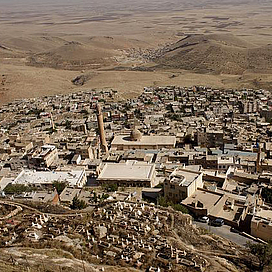
Cuneiform Artefacts of Iraq in Context
Mesopotamia, the land located between the Euphrates and Tigris rivers, is known as the cradle of civilisation. It was here that writing was invented around 5,000 years ago. The approximately 17,000 cuneiform tablets in the Iraq Museum in Baghdad are a central part of this cultural heritage. As well as being preserved and restored as part of the international Cuneiform Artefacts of Iraq in Context (CAIC) project, researchers are also documenting and studying the cuneiform inscriptions using the latest technology, including 3D photography and artificial intelligence.
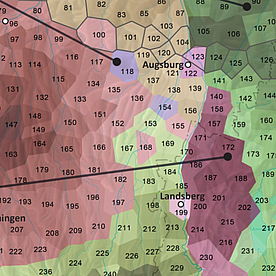
Swabian Dictionary
The Dialectology Information System for Bavarian Swabia (DIBS) studies and documents the Swabian dialects in the administrative division of Bavarian Swabia, as spoken in the 20th century. The objective is to document and describe the entire vocabulary in dictionary articles. The online dictionary is freely accessible and provides information on the meaning, grammar, geographical spread and origin of each entry.
Franconian Dictionary
The Franconian Dictionary project collects, documents and describes the complete vocabulary of the Franconian dialect in an online database. The work is based on over 100,000 questionnaires dating from 1927 to 2001, which are semantically, grammatically and etymologically analysed by the editorial team.
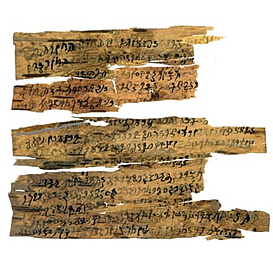
Early Buddhist Manuscripts from Gandhāra
Gandhāra is the former name of the region now located in north-western Pakistan and neighbouring parts of Afghanistan. Its wealth in ancient times came from Silk Road trade and the region played a key role in the transmission of Indian Buddhism to Central and East Asia. The project examines and edits the Buddhist manuscripts discovered in this region since the 1990s.
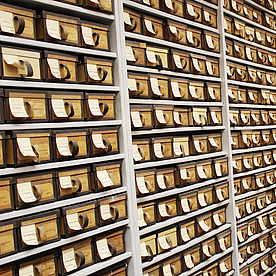
Thesaurus linguae Latinae
The Thesaurus Linguae Latinae is the first comprehensive scholarly dictionary of ancient Latin from its origins to AD 600. It is the only lexicon in the world that takes account not only of classical Latinity, but also the texts from late antiquity and the Christian era. Following critical analysis and interpretation of approximately one million attested examples, dictionary entries are produced to give the history of the meanings and usage of each word.
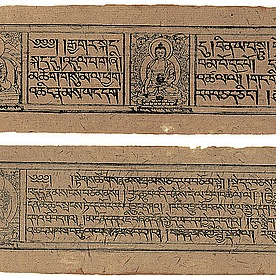
Dictionary of Literary Tibetan
The Dictionary of Literary Tibetan is the first scholarly reference work to show the historical development of the Tibetan vocabulary using text sources. The corpus covers all eras of Tibetan literature, from its origins to the 19th century, and includes a wide range of genres, from old Tibetan inscriptions to historical texts and literary and religious writing.
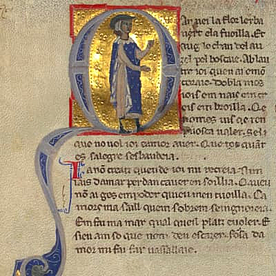
Knowledge Networks in the Medieval Romance Cultural Sphere
During the High and Late Middle Ages, science communication was very often conducted in the languages of the Romance cultural sphere, such as Italian, French or Occitan. The use of these languages enabled cultural exchange and helped to lay a foundation for the European identity as a knowledge society. The project looks at two of the knowledge domains during that period – medicine and law – and combines methods from the fields of linguistics, textual philology and history of science with digital humanities and ontology engineering.