Digital Humanities
The Academy supports the work of humanities researchers with innovative digitalisation concepts and digital technology. Digital humanities methodology enables the creation of extensive digital databases on subjects like baroque ceiling painting or Bavarian dialects, as well as digital publication series that are accessible to researchers and the general public alike.

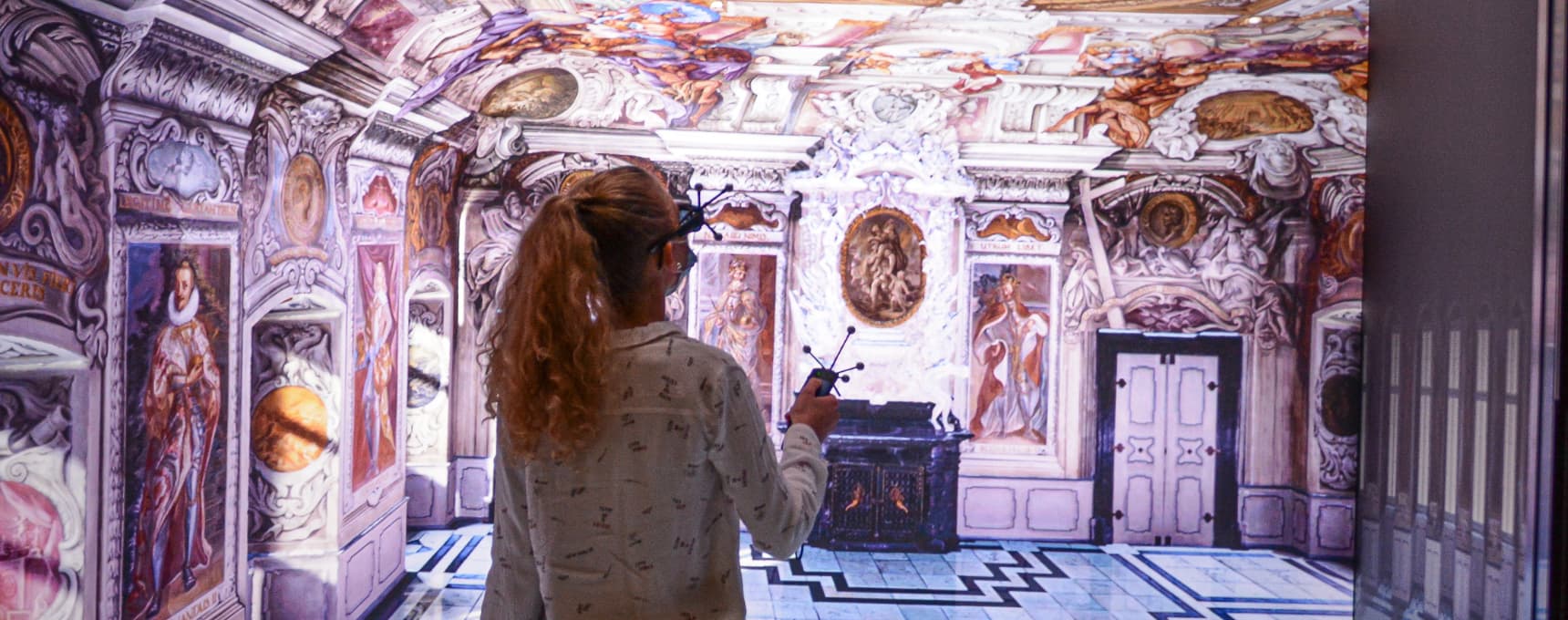
Corpus of Baroque Ceiling Painting in Germany
Ceiling and wall paintings were among the most iconic design elements of baroque interiors. Between 1550 and 1800, castles, churches, ballrooms and libraries were graced with astonishingly diverse and innovative surface paintings. The project studies the 4,000 or so preserved and restorable paintings that have survived in present-day Germany. Innovative digital techniques are used to make the findings available in an online database.
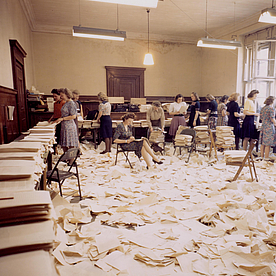
Digital Nuremberg Military Tribunals
The project provides digital access to the extensive files produced in the subsequent Nuremberg trials (1946–1949). Its work combines basic research on (legal) history with digital humanities methods, artificial intelligence and natural language processing. The project’s aims are to make an important chapter of Germany’s post-war history more accessible to an international audience, as well as provide fresh impetus for research on international criminal law and reappraisal of the crimes of the Nazi regime.
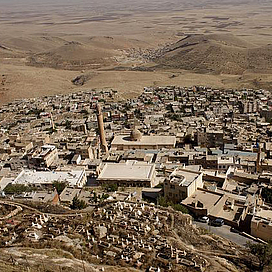
Cuneiform Artefacts of Iraq in Context
Mesopotamia, the land located between the Euphrates and Tigris rivers, is known as the cradle of civilisation. It was here that writing was invented around 5,000 years ago. The approximately 17,000 cuneiform tablets in the Iraq Museum in Baghdad are a central part of this cultural heritage. As well as being preserved and restored as part of the international Cuneiform Artefacts of Iraq in Context (CAIC) project, researchers are also documenting and studying the cuneiform inscriptions using the latest technology, including 3D photography and artificial intelligence.
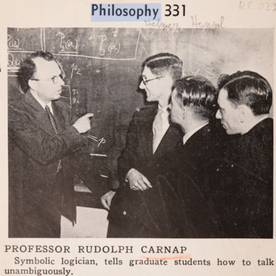
Rudolf Carnap Digital
The “Rudolf Carnap Digital. Developing the Collected Works in the Contexts of Modernity: Vienna Circle, Formal Philosophy, Emigration, Cold War” project catalogues and digitalises the complete works of the philosopher Rudolf Carnap (1891–1970), comprising his writings, diaries and over 10,000 letters. The objective is to produce a critical complete edition and an intellectual biography.

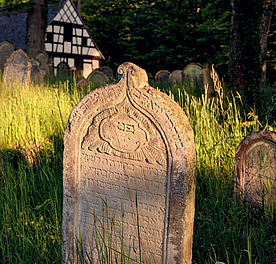
Steinerne Zeugen digital
The “Steinerne Zeugen digital. German-Jewish Sepulchral Culture between the Middle Ages and the Modern Era – Space, Form, Inscriptions” project is dedicated to studying the Jewish cemeteries dating from the 11th century onwards that still survive in Germany. By producing an edition of Hebrew and Hebrew/German grave inscriptions and analysing the design language of the gravestones and their topographical arrangement, the project will be able to create a representative corpus of text and images.