
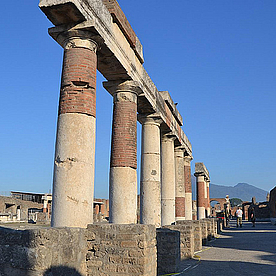
Archaeological Investigations and Excavations of Ancient Urbanity
Urbanisation set the pace for the development of ancient civilisations. The cities of antiquity gave rise to new forms of cohabitation and complex legal, economic and power structures. Lifestyles also became more elaborate. The project studies the material legacy of cities in Ancient Greece and Rome, including Pompeii, Selinunte, Apollonia and Terracina, creates networking opportunities for institutes, and investigates new interdisciplinary methods.

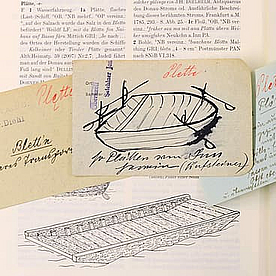
Bavarian Dictionary
The Bavarian Dictionary project explores and documents the vocabulary of the dialects of Old Bavaria (a region corresponding nowadays to Upper Bavaria, Lower Bavaria and the Upper Palatinate) from the early Middle Ages to the present day. As well as the literary tradition dating from the 8th century, the researchers are also interested in the dialects as they are spoken today, which they record using the latest citizen science methods. The dictionary provides information on the grammar, age, geographical spread, frequency, pronunciation and origin of each word.
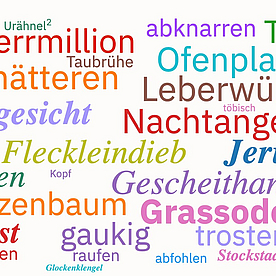
Bayerns Dialekte Online
Bayerns Dialekte Online (BDO) is the central online platform for the Academy’s three Bavarian dialect dictionaries: the Bavarian Dictionary, the Franconian Dictionary and the Dialectology Information System for Bavarian Swabia. The database contains the research findings from all three projects and makes them available along with the dictionary entries in an open-access online tool with extensive search functionalities.
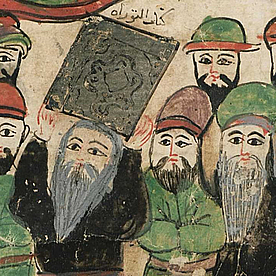
Biblia Arabica
This project is a comprehensive study of Arabic translations of the Hebrew Bible / the Old Testament. These texts are an important testimony to the shared cultural heritage of the Jewish, Christian and Muslim communities of the Middle East. Digital methods are used to identify and describe approximately 8,200 manuscripts and digitally publish a selection of them in editions and English translations.
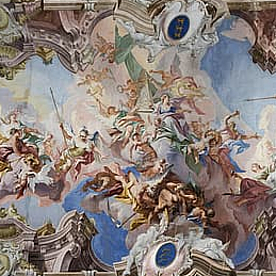
Corpus of Baroque Ceiling Painting in Germany
Ceiling and wall paintings were among the most iconic design elements of baroque interiors. Between 1550 and 1800, castles, churches, ballrooms and libraries were graced with astonishingly diverse and innovative surface paintings. The project studies the 4,000 or so preserved and restorable paintings that have survived in present-day Germany. Innovative digital techniques are used to make the findings available in an online database.
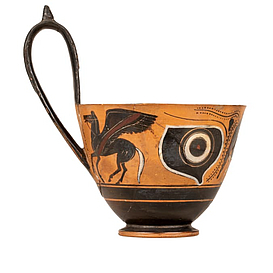
Corpus Vasorum Antiquorum
The shapes, decorations and inscriptions of ancient Greek ceramics are a special kind of historical source, offering a wealth of information on what life was like in the living environments of the time. They provide one of the most important foundations of our knowledge of antiquity, complementing the information acquired from written sources. The international Corpus Vasorum Antiquorum project uses uniform standards to catalogue the painted ancient Greek vases in museums and collections around the world and makes this information available in an online database.
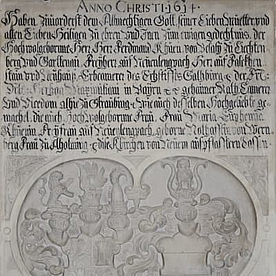
German Inscriptions from the Middle Ages and Early Modern Period
Inscriptions are texts marked on “durable” materials such as stone, wood, metal, textile and glass. They often provide a better record of historical events and figures than other written sources. The project makes inscriptions from Bavaria dating from the Middle Ages and the early modern period accessible in a single edition. The work involves transcribing often only partially legible texts as well as translation, object description, historical classification and commentary.
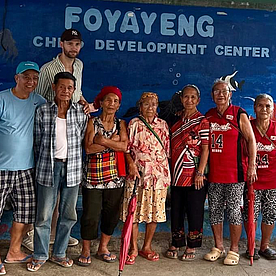
German Colonialism in the Philippines
The collection of pharmacist Heinrich Rothdauscher (1851–1937) is among the oldest focusing on the Philippines to be found in German museums. It comprises 112 culturally sensitive ritual, cult and everyday objects which are currently preserved in Munich’s Museum Fünf Kontinente. In cooperation with the societies of origin and Filipino researchers, the project aims to explain the historical context in which the objects were acquired. It does this through a digital text edition of key sources, complete photographic documentation of the collection and 3D scans of selected items.
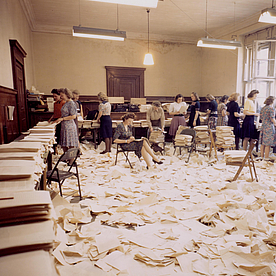
Digital Nuremberg Military Tribunals
The project provides digital access to the extensive files produced in the subsequent Nuremberg trials (1946–1949). Its work combines basic research on (legal) history with digital humanities methods, artificial intelligence and natural language processing. The project’s aims are to make an important chapter of Germany’s post-war history more accessible to an international audience, as well as provide fresh impetus for research on international criminal law and reappraisal of the crimes of the Nazi regime.
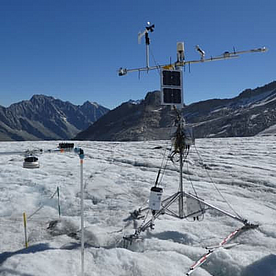
Geodesy and Glaciology
In this project, researchers from the fields of geodesy, geophysics and meteorology collaborate to study glaciers in their role as important climate indicators as well as how glaciers affect the continental water cycle and interact with the Earth’s solid surface. In addition to taking long-term measurements at the Vernagtferner glacier in the Ötztal Alps, the researchers’ work also takes them to Norway, Iceland, the Pamir Mountains and the Karakoram Range. An additional focus area is the observation of geodynamic processes using the latest satellite geodesy methods.

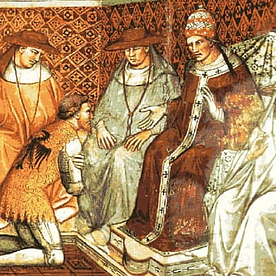
The Formation of Europe by Overcoming the Schism of the 12th Century
The Alexandrine schism (1159–1177) was the most crucial test in the formation phase of the High Middle Ages in Europe. “The Formation of Europe by Overcoming the Schism of the 12th Century” is a project set up to examine the course of events and mechanisms of the papal schism. It uses this historical episode as a model and comparative case to analyse overarching questions relating to division, escalation and crisis management.

Ecology Forum
The Ecology Forum is made up of experts in the field of environmental research. Its work involves communicating ecology research topics and findings to the general public, interdisciplinary discussion of topical environmental issues, offering solutions to current problems and challenges, and advising political and management decision-makers on a regular basis.
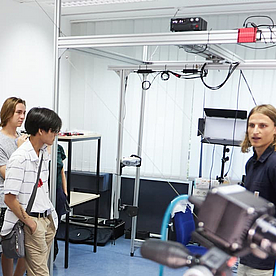
Technology Forum
Creating a greater understanding and acceptance of technology in Bavaria is the mission of an interdisciplinary group of experts that make up the Technology Forum. In a bid to improve the uptake of STEM subjects, it set up a schools programme to give upper secondary level pupils in Bavaria close insight into the latest technology research. The symposia organised by the Forum, which are mainly aimed at teachers, are regarded as particularly important for promoting the STEM subjects.
Franconian Dictionary
The Franconian Dictionary project collects, documents and describes the complete vocabulary of the Franconian dialect in an online database. The work is based on over 100,000 questionnaires dating from 1927 to 2001, which are semantically, grammatically and etymologically analysed by the editorial team.
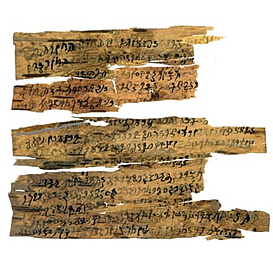
Early Buddhist Manuscripts from Gandhāra
Gandhāra is the former name of the region now located in north-western Pakistan and neighbouring parts of Afghanistan. Its wealth in ancient times came from Silk Road trade and the region played a key role in the transmission of Indian Buddhism to Central and East Asia. The project examines and edits the Buddhist manuscripts discovered in this region since the 1990s.
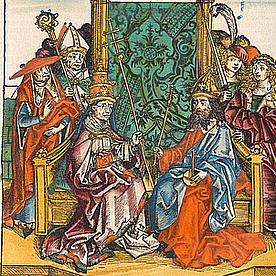
German Historical Sources from the Middle Ages
"German Historical Sources from the Middle Ages" is a digital catalogue of narrative sources originating from the medieval Frankish and German Empire of around 750 to 1519, or that relate to German medieval history. The digital collection currently encompasses over 5,300 works, including “Carmina Burana” and Otto von Freising's “Chronicle”.
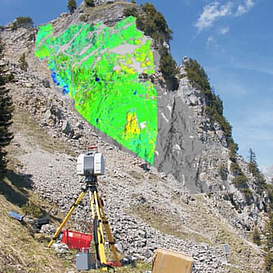
Geodesy
The German Geodetic Commission (DGK) is the representative body for geodetic research and university teaching in Germany. Its activities include research coordination, consulting, representation on international bodies and public relations. It maintains close networking relationships with geodesy organisations in neighbouring countries. Regular guests representing management and professional associations ensure an exchange of information between science and practitioners.
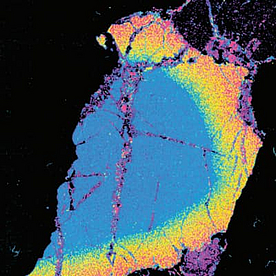
Geoscientific High-pressure Research
The Geoscientific High-pressure Research advisory board supports the scientific work of the Bavarian Research Institute of Experimental Geochemistry and Geophysics (BGI) at the University of Bayreuth. It provides advice on appointments as well as budgetary and structural matters.

Catalogue of German-Language Illustrated Medieval Manuscripts
The Catalogue of German-Language Illustrated Medieval Manuscripts (KdiH) project is dedicated to researching the relationship between text and image. Around 3,500 medieval German-language manuscripts are classified into subject-based groups, documented and explained. Different aspects of literary and cultural studies as well as art history are analysed to gain an understanding of the interplay between text and image in works produced in the Middle Ages.
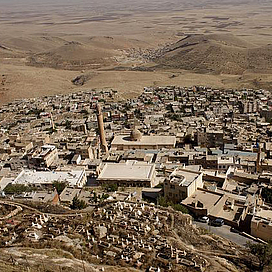
Cuneiform Artefacts of Iraq in Context
Mesopotamia, the land located between the Euphrates and Tigris rivers, is known as the cradle of civilisation. It was here that writing was invented around 5,000 years ago. The approximately 17,000 cuneiform tablets in the Iraq Museum in Baghdad are a central part of this cultural heritage. As well as being preserved and restored as part of the international Cuneiform Artefacts of Iraq in Context (CAIC) project, researchers are also documenting and studying the cuneiform inscriptions using the latest technology, including 3D photography and artificial intelligence.
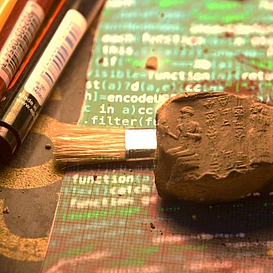
KIŠIB. Digital Corpus of Ancient West Asian Seals and Sealings
Seals and their impressions on clay sealings and cuneiform tablets (“kišib” in the Sumerian language) form the oldest and most extensive body of images originating from the Middle East. This valuable store of knowledge is scattered in museums and collections around the world, and digital access has been limited up to now. The project opens up a representative corpus of around 80,000 seals and sealings from the 4th to the 1st century BC using methods including machine learning.
Cultures of Political Decision-Making in Modern Democracy
Democracy is an ongoing process that continually requires fresh thinking, negotiation and practice. The project examined the period from around 1950 to the present day and focused on several countries, including the Federal Republic of Germany, the UK and eastern and central Europe (since 1989). The studies centred around the legal, socio-political and cultural foundations and forms of democratic decision-making processes.
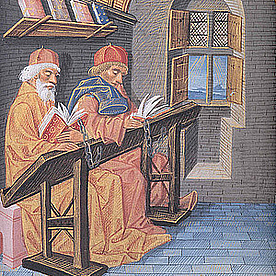
Medieval Library Catalogues of Germany and Switzerland
The fall of the Roman Empire also resulted in the loss of famous libraries from antiquity, such as the one in Alexandria or the Biblioteca Palatina in Rome. Europe had to wait until the Middle Ages for a revival of its book culture, which was centred around its monasteries. The project systematically indexes all library catalogues created in Germany and Switzerland up to around the year 1500, thus enabling further research on the intellectual heritage of the Middle Ages.
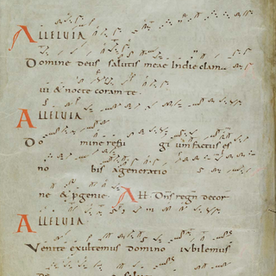
Dictionary of Medieval Latin
The Dictionary of Medieval Latin (MLW) is the largest of the national dictionary projects focusing on medieval Latinity compiled under the aegis of the Union Académique Internationale. It is based on Latin sources that were created between the 6th century and the end of the 13th century in German-speaking regions and have been edited. The archive on which the dictionary is based contains over one million slips of paper excerpted from around 4,000 texts covering all literary genres, technical writing and official documents.
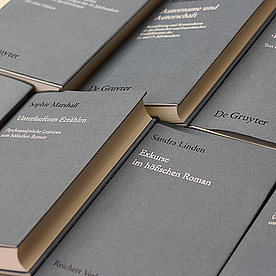
Munich Texts and Studies of German Medieval Literature
The Munich Texts and Studies of German Medieval Literature (MTU) is a highly regarded international series of publications that undertake research into medieval German-language literature, providing scholars with a selection of editorially, methodically and analytically oriented works. As a forum for publications for use in basic research (editions, studies on the history of tradition and texts, standard repertoria), it provides analytical articles concerned with the current discussion of methodology based on examples from studies.
Neo-imperialism as a Contemporary Challenge
The ad hoc working group “Neo-imperialism as a Contemporary Challenge” analyzes the neo-imperial strategies of Russia, China, and the United States against the backdrop of a shaken international order. It examines the pursuit of prestige, competition for power, and imperial self-concepts, as well as the historical narratives used to legitimize domination and expansion. Methodologically, it combines comparative, interdisciplinary research with structured dialogue formats involving parliamentarians. The goal is policy-oriented research and a direct transfer of research findings into policy and the public sphere.
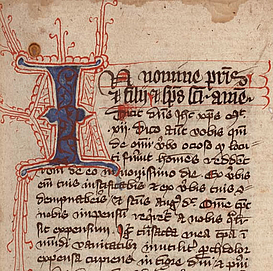
The Austrian Bible Translator
A German-language translation of the Bible was already in existence 200 years before Martin Luther came along. A version with commentaries was created in the 14th century by an anonymous author – known as the “Austrian bible translator” based on the location where most of the manuscripts were found. It is regarded as the most significant bible translation of the Middle Ages. This project is working to produce a commented edition of these works in hybrid form (print and digital).
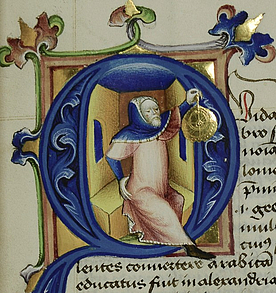
Ptolemaeus Arabus et Latinus
Polymath Claudius Ptolemaeus (c. AD 100–160), better known as Ptolemy, was the most influential proponent of geocentrism and the author of such works as the Almagest and the Tetrábiblos. This project catalogues the Arabic and Latin versions of his astronomical and astrological works via catalogues of all surviving manuscripts, editions of Arabic and Latin works either written by Ptolemy or falsely attributed to him, and commentary literature. Research tools and studies are further components of the project.
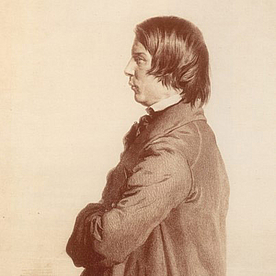
Robert Schumann’s Poetic World
Robert Schumann’s (1810–1856) poetry, writings and musical works are a prime example of 19th-century music and its aesthetics. This project reconstructs this “poetic world” in a historical-critical edition of his writings, poems and vocal compositions and combines basic editorial and philological research with musicology, literary studies and the digital humanities.
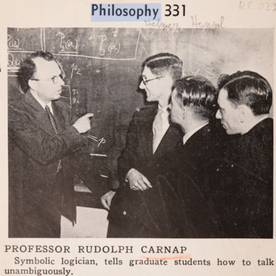
Rudolf Carnap Digital
The “Rudolf Carnap Digital. Developing the Collected Works in the Contexts of Modernity: Vienna Circle, Formal Philosophy, Emigration, Cold War” project catalogues and digitalises the complete works of the philosopher Rudolf Carnap (1891–1970), comprising his writings, diaries and over 10,000 letters. The objective is to produce a critical complete edition and an intellectual biography.
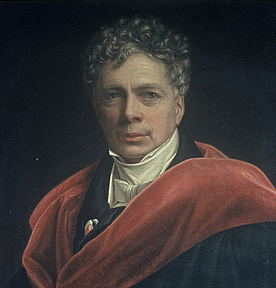
Schelling in Munich
This project catalogues the as-yet-unedited literary remains of philosopher Friedrich Wilhelm Joseph Schelling from his Munich period (1811–1841) and makes them accessible in a hybrid edition. A particular focus is placed on origin and reception. This provides a reliable basis for understanding Schelling’s thoughts and works in their historical context.

Writings of John of Damascus
John of Damascus (c. AD 650–750) is known as the “last of the Greek fathers” of both the Eastern and Western Churches. His work encompasses the entire field of Greek theology at the end of its great epoch and provides a dogmatic summary of the Orthodox faith. This project is compiling the first complete critical edition of his works.
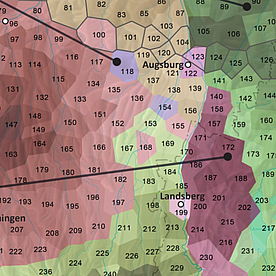
Swabian Dictionary
The Dialectology Information System for Bavarian Swabia (DIBS) studies and documents the Swabian dialects in the administrative division of Bavarian Swabia, as spoken in the 20th century. The objective is to document and describe the entire vocabulary in dictionary articles. The online dictionary is freely accessible and provides information on the meaning, grammar, geographical spread and origin of each entry.
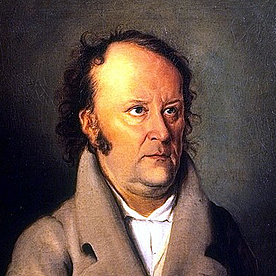
The Historical-critical Jean Paul Edition
Writer Jean Paul (1763–1825) was one of the most important figures in German classicism – and yet his work has not yet been completely catalogued. The “Sprachgitter digital: The Historical-critical Jean Paul Edition” project will cover all parts of his oeuvre from manuscript to printed work and map the interlinking patterns in Jean Paul’s work in an open-access digital publication.
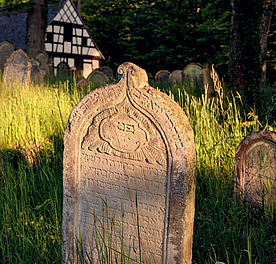
Steinerne Zeugen digital
The “Steinerne Zeugen digital. German-Jewish Sepulchral Culture between the Middle Ages and the Modern Era – Space, Form, Inscriptions” project is dedicated to studying the Jewish cemeteries dating from the 11th century onwards that still survive in Germany. By producing an edition of Hebrew and Hebrew/German grave inscriptions and analysing the design language of the gravestones and their topographical arrangement, the project will be able to create a representative corpus of text and images.
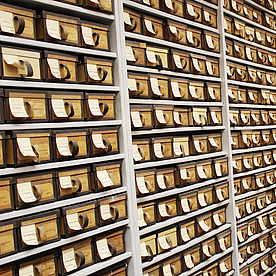
Thesaurus linguae Latinae
The Thesaurus Linguae Latinae is the first comprehensive scholarly dictionary of ancient Latin from its origins to AD 600. It is the only lexicon in the world that takes account not only of classical Latinity, but also the texts from late antiquity and the Christian era. Following critical analysis and interpretation of approximately one million attested examples, dictionary entries are produced to give the history of the meanings and usage of each word.
Dictionary of Literary Tibetan
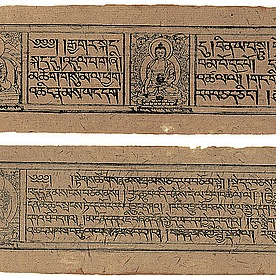
The Dictionary of Literary Tibetan is the first scholarly reference work to show the historical development of the Tibetan vocabulary using text sources. The corpus covers all eras of Tibetan literature, from its origins to the 19th century, and includes a wide range of genres, from old Tibetan inscriptions to historical texts and literary and religious writing.
Emperor Frederick II’s Charters
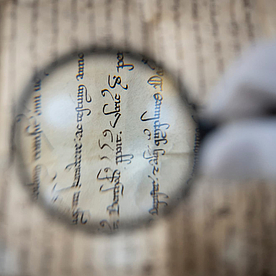
The objective of this project is to collect and then process and edit over 2,600 charters of the Holy Roman Emperor Frederick II (1194–1250), of the Hohenstaufen dynasty, from all over Europe. The project provides an understanding of Europe’s legal and constitutional history, specifically that of Germany (during the Holy Roman Empire), Italy and Southern France, as well as general history, the history of the chancery and administrative structure, and the development of the Latin language in the 13th century.
Richard Strauss Edition
The “Critical Edition of the Works of Richard Strauss” project is dedicated to all of the theatrical works, orchestral works, lieder, choral works and chamber music by composer Richard Strauss (1864–1949) and uses the latest historical-critical method. The project gives access to newly orchestrated scores with critical apparatus. As well as being of interest to scholars, this work also gives insight into the artistic processes.

Scientific Software
Scientific software has been a vital research tool for decades, used in everything from simulations to artificial intelligence. To date, however, no-one has come up with a strategy to collect and preserve these important milestones of digital science. The project “Edition Scientific Software (EWS): Research on History of Science and Philosophy of Science Aspects and Edition of Software History of Digital Sciences from 1950 to 2010” fills this gap. The project explores, documents and edits historical software projects from a wide range of disciplines and makes this information available on an online platform.
Knowledge Networks in the Medieval Romance Cultural Sphere
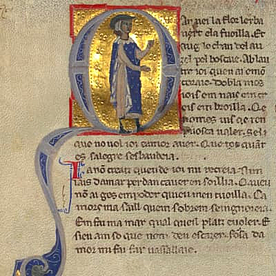
During the High and Late Middle Ages, science communication was very often conducted in the languages of the Romance cultural sphere, such as Italian, French or Occitan. The use of these languages enabled cultural exchange and helped to lay a foundation for the European identity as a knowledge society. The project looks at two of the knowledge domains during that period – medicine and law – and combines methods from the fields of linguistics, textual philology and history of science with digital humanities and ontology engineering.